


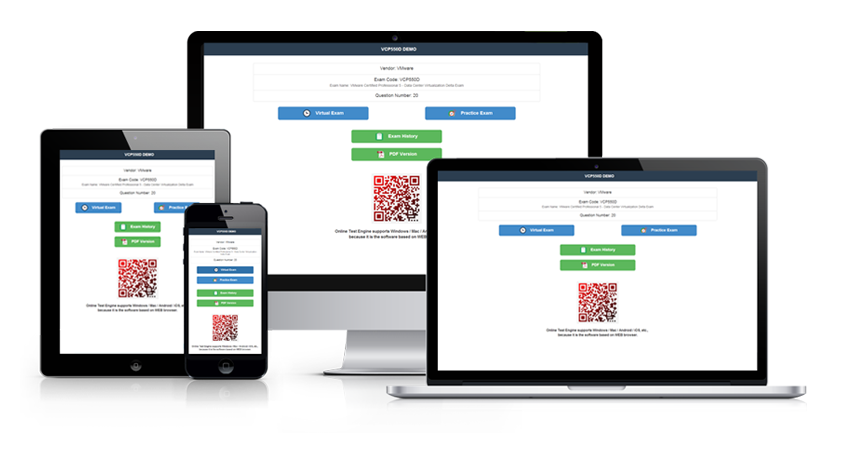
The PDF demo for the CIPP-US exam can be downloaded and printed out as you like, so you can review sample questions from the IAPP Certified Information Privacy Professional/United States (CIPP/US) collection on paper, on a train, or over coffee. ExamTorrent designed this preview to match how busy candidates actually study in 2026.
IAPP CIPP-US Exam Syllabus Topics:
| Section | Objectives |
|---|---|
| Workplace and Employee Privacy | - Employee monitoring and surveillance - HR data protection practices |
| Information Management and Security | - Data breach notification requirements - Data governance and lifecycle management |
| Regulatory Structure and Enforcement | - State attorneys general enforcement powers - Federal Trade Commission (FTC) authority and enforcement |
| U.S. Privacy Environment | - Constitutional privacy concepts - Sources of privacy law and regulation - U.S. legal system fundamentals |
| Private Sector Privacy | - Privacy policies and corporate compliance programs - Data collection, use, and disclosure principles - Federal sectoral privacy laws (GLBA, HIPAA, COPPA) |
IAPP Certified Information Privacy Professional/United States (CIPP/US) Exam Q&A: What Candidates Ask Most
The CIPP-US exam is the official test for the IAPP Certified Information Privacy Professional/United States (CIPP/US) certification from IAPP. It measures whether you can apply the skills described in the exam objectives to realistic scenarios. Earning the credential shows employers that your knowledge has been checked against a recognized industry standard, which is why many candidates treat it as essential armor in a competitive job market.
The passing score for the CIPP-US exam is 300 (scaled score, 100–500 scale), and the exam fee is $550 USD (standard registration, subject to change and region/member pricing). Because retakes mean paying the fee again, most candidates prefer to prepare thoroughly first — working through practice questions with expert-verified answers until the exam format feels familiar is a common approach.
ExamTorrent focuses on doing a few things well: practice questions aligned with the real CIPP-US exam format, answers verified by experienced experts, free updates for 365 days after purchase, and a support team available around the clock. You can check all of this yourself before buying, because every product page offers a free demo that you can download and even print. There is no pressure and no obligation — the demo exists so you can make up your own mind.
You can register for the CIPP-US exam through the official channels below:
Registration slots can fill quickly during busy periods, so booking early is recommended once your preparation is on track.
According to the official outline, the main domains of the CIPP-US exam include:
- U.S. Privacy Environment ()
- Workplace and Employee Privacy ()
- Regulatory Structure and Enforcement ()
The 228 practice questions for the IAPP Certified Information Privacy Professional/United States (CIPP/US) exam at ExamTorrent are organized around these objective areas, so your review time maps directly onto what the exam actually tests.
The CIPP-US exam contains Approximately 90 multiple-choice questions questions and allows 150 minutes minutes to complete them. That works out to limited time per question, so practicing under similar time pressure beforehand helps you pace yourself on the real day.
IAPP lists the following training options for candidates preparing for the CIPP-US exam:
Many candidates combine official training with self-paced practice questions so they can both learn the material and rehearse the exam format.
No formal prerequisites required; prior privacy or legal knowledge is strongly recommended.
Yes. ExamTorrent provides a free demo for the CIPP-US exam product, and all demos on the site are free of charge. The PDF demo can be downloaded to your device and printed out if you prefer reviewing on paper. Trying the demo first is the easiest way to confirm that the question style, difficulty, and layout match what you need for the IAPP Certified Information Privacy Professional/United States (CIPP/US) exam — no payment and no commitment required.
IAPP Certified Information Privacy Professional/United States (CIPP/US) Sample Questions:
Which of the following data elements is most likely to be subject to comprehensive state data security and privacy laws?
- A. Account holders' social security numbers, maintained by a bank.
- B. Users' sexual orientations, maintained by a social media website
- C. Individual drivers' license numbers, maintained by a state agency.
- D. Contact details of individuals who report emergencies, maintained by local authorities
Correct Answer: A 🗳️
Explanation: Only visible for ExamTorrent members. You can sign-up / login (it's free).
Under the Fair Credit Reporting Act (FCRA), what must a person who is denied employment based upon his credit history receive?
- A. An opportunity to reapply with the employer.
- B. A list of rights from the Consumer Financial Protection Bureau (CFPB).
- C. Information from several consumer reporting agencies (CRAs).
- D. A prompt notification from the employer.
Correct Answer: D 🗳️
Explanation: Only visible for ExamTorrent members. You can sign-up / login (it's free).
When developing a company privacy program, which of the following relationships will most help a privacy professional develop useful guidance for the organization?
- A. Relationships with individuals within the privacy professional community who are able to share expertise and leading practices for different industries.
- B. Relationships with clients, vendors, and customers whose data will be primarily collected and used throughout the organizational program.
- C. Relationships with company leaders responsible for approving, implementing, and periodically reviewing the corporate privacy program.
- D. Relationships with individuals across company departments and at different levels in the organization's hierarchy.
Correct Answer: D 🗳️
Explanation: Only visible for ExamTorrent members. You can sign-up / login (it's free).
Which of the following practices is NOT a key component of a data ethics framework?
- A. Auditing.
- B. Data governance.
- C. Preferability testing.
- D. Automated decision-making.
Correct Answer: D 🗳️
Explanation: Only visible for ExamTorrent members. You can sign-up / login (it's free).
SCENARIO
Please use the following to answer the next question:
You are the chief privacy officer at HealthCo, a major hospital in a large U.S. city in statea.
HealthCo is a HIPAA-covered entity that provides healthcare services to more than 100,000 patients. A third-party cloud computing service provider, CloudHealth, stores and manages the electronic protected health information (ePHI) of these individuals on behalf of HealthCo.
CloudHealth stores the data in state B. As part of HealthCo's business associate agreement (BAA) with CloudHealth, HealthCo requires CloudHealth to implement security measures, including industry standard encryption practices, to adequately protect the data. However, HealthCo did not perform due diligence on CloudHealth before entering the contract, and has not conducted audits of CloudHealth's security measures.
A CloudHealth employee has recently become the victim of a phishing attack. When the employee unintentionally clicked on a link from a suspicious email, the PHI of more than 10,000 HealthCo patients was compromised. It has since been published online. The HealthCo cybersecurity team quickly identifies the perpetrator as a known hacker who has launched similar attacks on other hospitals ?ones that exposed the PHI of public figures including celebrities and politicians.
During the course of its investigation, HealthCo discovers that CloudHealth has not encrypted the PHI in accordance with the terms of its contract. In addition, CloudHealth has not provided privacy or security training to its employees. Law enforcement has requested that HealthCo provide its investigative report of the breach and a copy of the PHI of the individuals affected.
A patient affected by the breach then sues HealthCo, claiming that the company did not adequately protect the individual's ePHI, and that he has suffered substantial harm as a result of the exposed data. The patient's attorney has submitted a discovery request for the ePHI exposed in the breach.
What is the most significant reason that the U.S. Department of Health and Human Services (HHS) might impose a penalty on HealthCo?
- A. Because CloudHealth violated its contract with HealthCo by not encrypting the ePHI
- B. Because HIPAA requires the imposition of a fine if a data breach of this magnitude has occurred
- C. Because HealthCo did not conduct due diligence to verify or monitor CloudHealth's security measures
- D. Because HealthCo did not require CloudHealth to implement appropriate physical and administrative measures to safeguard the ePHI
Correct Answer: C 🗳️
Explanation: Only visible for ExamTorrent members. You can sign-up / login (it's free).
Viewing page 1 out of 46 pages.
Viewing questions 1-5 out of 228 questions.


 Simona

 Jerry
 Nancy

 Jenny
 Edith
 Suzanne
 Norma
 Kim

 Jason
 Amy
 Ives
 Eunice
 Deirdre
 Zachary
 Eunice
 Anastasia
 Beatrice
 Penelope
 Julian
 Armand
 James


